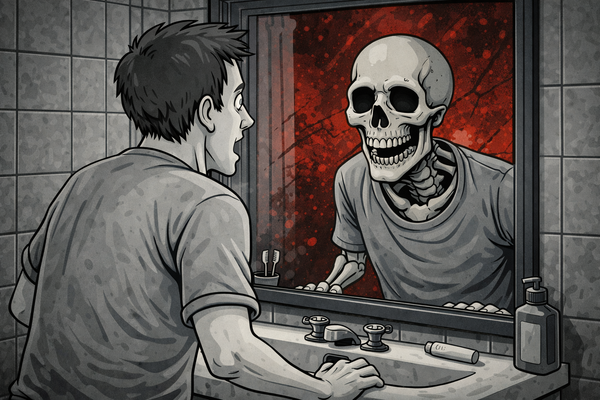
Monk Mode: Disciple or Disconnection?
Impact of isolation on mental health and how socializing can actually help you achieve your goals
Monk mode is often praised as the ultimate path to discipline and success on social media. But what gets rarely talked about is the emotional and social cost behind it.
In his early years of coming to America, Arnold Schwarzenegger used to go to the gym in the morning and do a workout, then go to his construction job and work for a full day, and then come back to the gym and have another session. He did that for years, winning 6 consecutive Mr. Olympia titles.
Today’s Gen Z would say he was in his MONK MODE.
What most people don’t know is that during this “monk mode” phase of Arnold’s life, his father and brother both died, and Arnold did not attend their funerals. “I didn’t feel I had to go back,” he said. “I was on a mission.”
While Arnold achieved legendary status and unparalleled success in the fitness industry, which is something most people will never attain, this dream came with a trade-off. This significant consequence is often overlooked by “monk mode” social media influencers, who are too preoccupied with editing content for their next post to discuss it.
So, what is monk mode?
It is a period in which you intentionally withdraw from social activities to work on a particular goal for a long time.
Hustle culture has contributed a lot to its popularity. People are drawn to the idea that they aren’t achieving success because they are socializing too much. It makes achieving success sound so simple.
Does monk mode work?
Implementing the idea of monk mode means trying to change your life completely in a short span of time, and that is a great way to burn out and eventually fail at it as well.
Monk mode is promoted as a way to achieve your goals and be productive, but what happens when you are more productive? You add more tasks to your to-do list. What happens when you respond to emails faster? You get more emails to respond to. The cycle never ends.
In short, it doesn’t work, and even if it did, you shouldn’t do it.
Manvi Srivastava is an ex-UPSC aspirant who recently went viral on social media because of a video she posted on her Instagram. Manvi wanted to achieve her dream of UPSC, and to do that, she went through years of isolation to study and clear the exams. In the video, she talked about how this isolation period affected her mental health, and she had to go through therapy. She mentioned that now she is struggling with making friends and has low self-esteem, irrespective of all her career achievements.
It turns out that social interaction is incredibly important for mental and physical health, and the impact of a lack of social interaction is always seen in people who shut themselves away, whether to achieve a goal or just out of insecurities.
We already have a loneliness epidemic all around the world, and promoting being alone as a form of self-improvement can just make things worse.
“You spent hours talking to friends? Pity! You could have used that time to be more productive.” Sounds like an amazing way to shame people for trying to socialize.
Talking to people can actually help you achieve your goals
When you have a goal in your mind that is going to demand a long period of intense focus and hard work, and it is common to feel stressed and overwhelmed during the process, most of us have experienced it at some point in our lives.
In those times when you feel frustrated, stressed, overwhelmed, and anxious, it is hard to regulate your emotions by yourself. You will feel helpless and feel that the goal is unachievable, and you should just give up.
This is where emotional co-regulation can be incredibly helpful. Rather than trying to manage your feelings entirely on your own, simply talking with someone can shift your emotional state. A meaningful conversation can lift your mood, renew your motivation, and reconnect you with your goals. This makes it easier to stay committed over the long term without experiencing burnout.
There are some days when I work out well, study well, and read, so by definition, I should feel productive and great, but I don’t. In those days, when I would just call someone and talk for like an hour, I suddenly felt great and energetic.
David Goggins, who is always on those monk mode motivational videos, has built his own team that he trusts and goes to for support. Arnold Schwarzenegger had his own group of gym buddies. Having that support system made the greats push harder.
That’s it, thank you for reading! I hope you got something out of it!!